Binary Tree Postorder Traversal
Problem Statement:
Given the root of a binary tree, return the postorder traversal of its nodes' values.
Example 1:
Input: root = [1,null,2,3]
Output: [3,2,1]
Explanation:
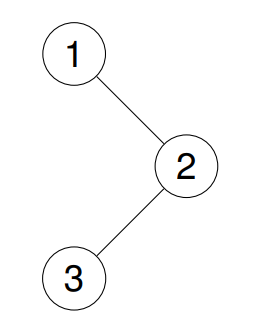
-
Example:
✅ Solution 1: Recursive Postorder Traversal
class Solution {
public:
    void postOrd(TreeNode* root, vector<int> &res){
        if(root == NULL) return;

        postOrd(root->left, res);   // Left
        postOrd(root->right, res);  // Right
        res.push_back(root->val);   // Root
    }

    vector<int> postorderTraversal(TreeNode* root) {
        vector<int> res;
        postOrd(root, res);
        return res;
    }
};
✅ Solution 2: Iterative Postorder Using Two Stacks
class Solution {
public:
    vector<int> postorderTraversal(TreeNode* root) {
        vector<int> res;
        if(root == NULL) return res;

        stack<TreeNode*> st1, st2;
        st1.push(root);

        while(!st1.empty()){
            root = st1.top(); st1.pop();
            st2.push(root);

            if(root->left)  st1.push(root->left);
            if(root->right) st1.push(root->right);
        }

        while(!st2.empty()){
            res.push_back(st2.top()->val);
            st2.pop();
        }

        return res;
    }
};
✅ Solution 3: Iterative Postorder Using One Stack
class Solution {
public:
    vector<int> postorderTraversal(TreeNode* root) {
        vector<int> res;
        if(root == NULL) return res;

        stack<TreeNode*> st;
        TreeNode* curr = root;

        while(curr != NULL || !st.empty()) {
            while(curr != NULL) {
                if(curr->right) st.push(curr->right); // Push right child first
                st.push(curr);                         // Push current node
                curr = curr->left;                     // Move to left child
            }

            curr = st.top(); st.pop();

            // Check if the right child is next in stack
            if(!st.empty() && curr->right != NULL && curr->right == st.top()) {
                st.pop();               // Remove right child
                st.push(curr);          // Push root back for later processing
                curr = curr->right;     // Process right child next
            } else {
                res.push_back(curr->val);
                curr = NULL;
            }
        }

        return res;
    }
};
📝 How It Works
Recursive:
- Simple and natural: Traverse left, then right, then visit root.
Two Stacks:
- First stack processes nodes in
Root → Right → Left. - Second stack reverses this to
Left → Right → Root.
One Stack:
- Tricky but optimized.
- Use one stack to simulate the recursion with careful checks to delay visiting root until after both subtrees are processed.
🧩 Key Order Rule
Postorder Traversal = [ Left, Right, Root ]
⏱️ Time & Space Complexity
| Approach | Time Complexity | Space Complexity |
|---|---|---|
| Recursive | O(n) | O(h) recursion stack |
| Two-stack | O(n) | O(n) |
| One-stack | O(n) | O(n) (worst-case skewed) |
⚠️ Edge Cases
- ✅ Empty tree → returns empty vector
- ✅ Tree with one node → returns single-element vector
- ✅ Only left or only right skewed trees → still works
- ✅ Balanced trees → handles recursion depth and stack growth efficiently
💡 Other Approaches
| Approach | Notes |
|---|---|
| Morris Postorder Traversal | O(1) space, very tricky and not common in interviews |
| Marked-Node Stack | Push command/state with node, similar to iterative simulation of recursion |
🔁 Related Problems
- LeetCode 145. Binary Tree Postorder Traversal
- LeetCode 144. Preorder Traversal
- LeetCode 94. Inorder Traversal
- LeetCode 102. Level Order Traversal
💬